
There is a serene and ancient Rajamahaa Vihaaraya – a Buddhist temple revered by the kings in the past and the villagers to date, which is only a brisk morning or evening walk away from Replenish. It is a very invigorating walk passing by people of all walks of life and discovering the village in its myriad manifestations that could meet the eye.
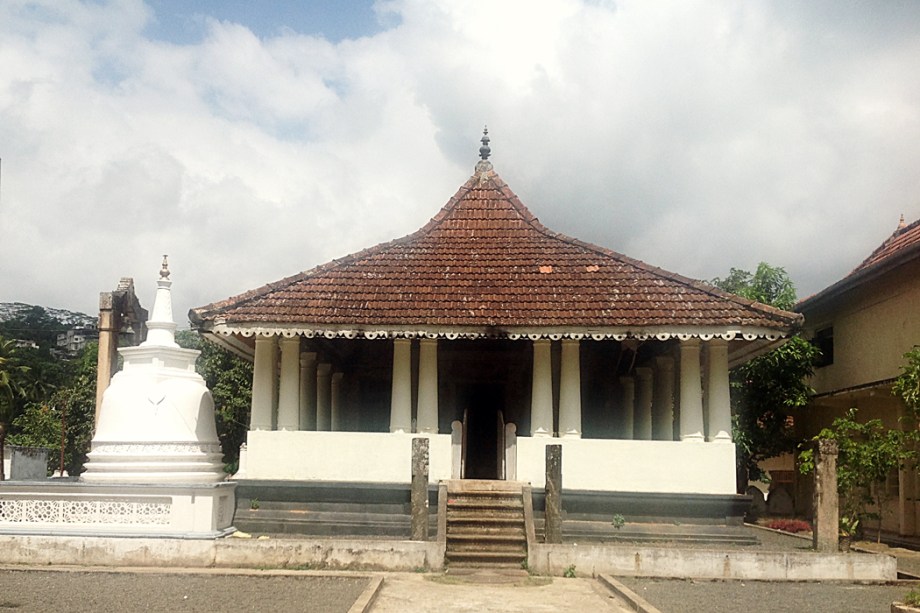
The temple Malagammana Puraana Rajamahaa Vihaaraya was built during the Kingdom of Kandy which was an independent monarchy located in the central and eastern parts of the island. The Kandyan kingdom was founded in the late 15th century and endured until the early 19th century. The dating suggested that this place of worship and scholarship had had a long history.
Artistically, the architecture, the lime walls & ceiling paintings of the shrine room, as well as the stone carvings were ready give-aways of significant and characteristic details of the Kandyan tradition of art and era. Interestingly, two distinct epochal stages of artistic development could be identified in the inner chamber of the shrine, when one closely examines the wall paintings that depict an older and latter highpoint of the Kandyan kingdom and its artistry – a rarity.
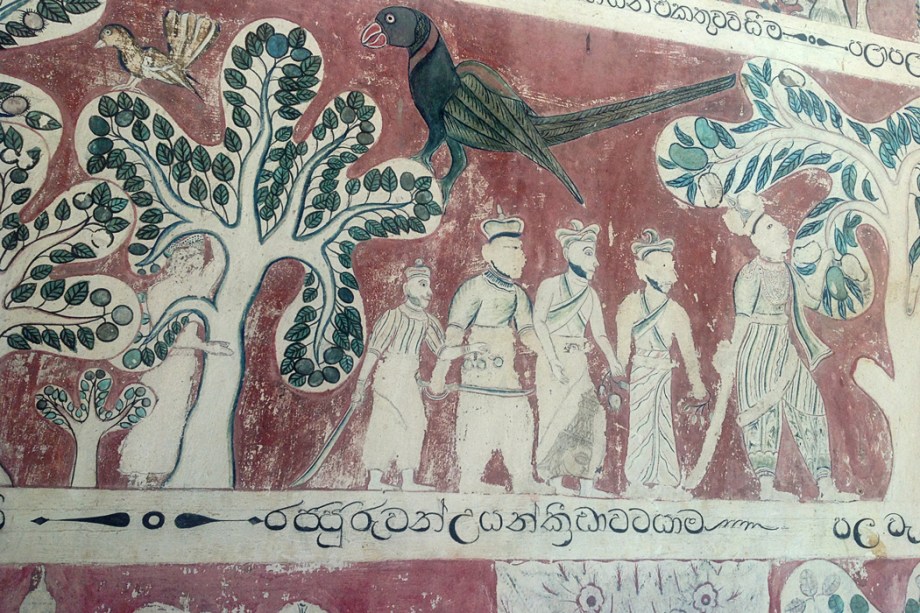
The older paintings on the cracking walls and the moist and mould ceilings are simple as per the techniques used to stomp the pigment as well as the subject matter – mostly the life of Buddha. One could observe the much traditional motives to be flat, disproportionate and two-dimensional, painted also on wooden panels with a reduced colour range like bleached-red, coral-white, beetle-black and a faded green on the off-white lime parchment.
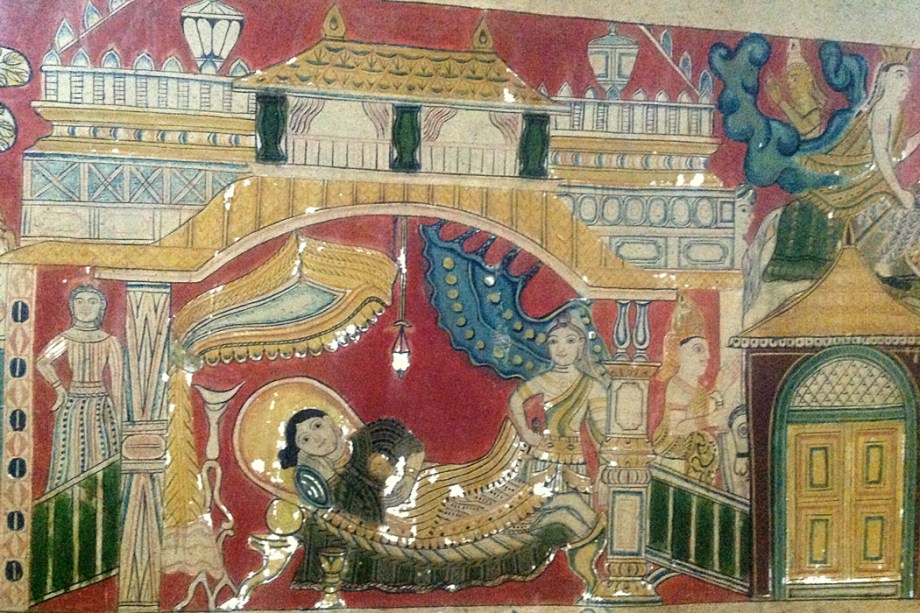
In contrast, the paintings belonging to a much latter stage stand different in style, bolder in colour palette and differentiated in subject matter as one could observe the colonizers’ mark – the Portuguese, the Dutch and less of the British – in depictions of the exteriors and interiors of palaces, ordinary homes, the diversified furniture to ornaments and attire.
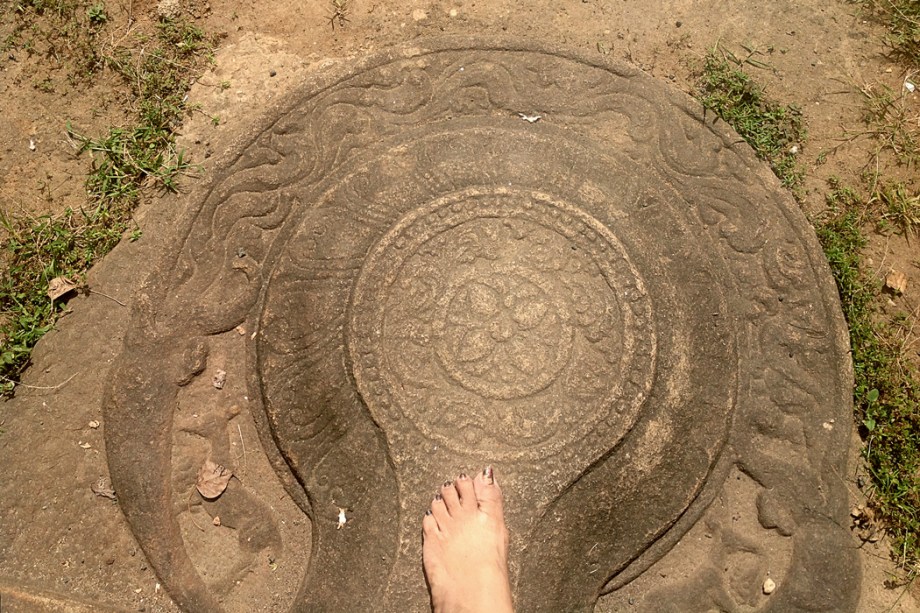
When one examines the architecture of the temple, the beautiful combination of both wood & stone is prominent and poignant. The foundation of the main shrine are carved out of stone block including the steps leading to the shrine and in particular the moonstone or the ‘Sandakada Pahana’ the landing circlic step in row, again typically Kandyan in style, which is comparatively simple in motives and carvings.
An enriching experience that is highlighted by the meditative silence in the soft winds that shake the Bo-tree with soft sand beneath the feet and a sweetened soothing scent in the breeze due to the burning incense and flickering coconut oil lamps encore.
 Replenish - The Retreat